
 1 year ago
The mini worm Caenorhabditis elegans has a encephalon conscionable astir nan width of a quality hair. Yet this animal’s itty-bitty organ coordinates and computes analyzable movements arsenic nan worm forages for food. “When I look astatine [C. elegans] and see its brain, I’m really struck by nan profound elegance and efficiency,” says Daniela Rus, a machine intelligence astatine MIT. Rus is truthful enamored pinch nan worm’s encephalon that she cofounded a company, Liquid AI, to build a caller type of artificial intelligence inspired by it.
Rus is portion of a activity of researchers who deliberation that making accepted AI much brainlike could create leaner, nimbler and possibly smarter technology. “To amended AI truly, we request to … incorporate insights from neuroscience,” says Kanaka Rajan, a computational neuroscientist astatine Harvard University.
Such “neuromorphic” technology astir apt won’t wholly switch regular computers aliases accepted AI models, says Mike Davies, who directs nan Neuromorphic Computing Lab astatine Intel successful Santa Clara, Calif. Rather, he sees a early successful which galore types of systems coexist.
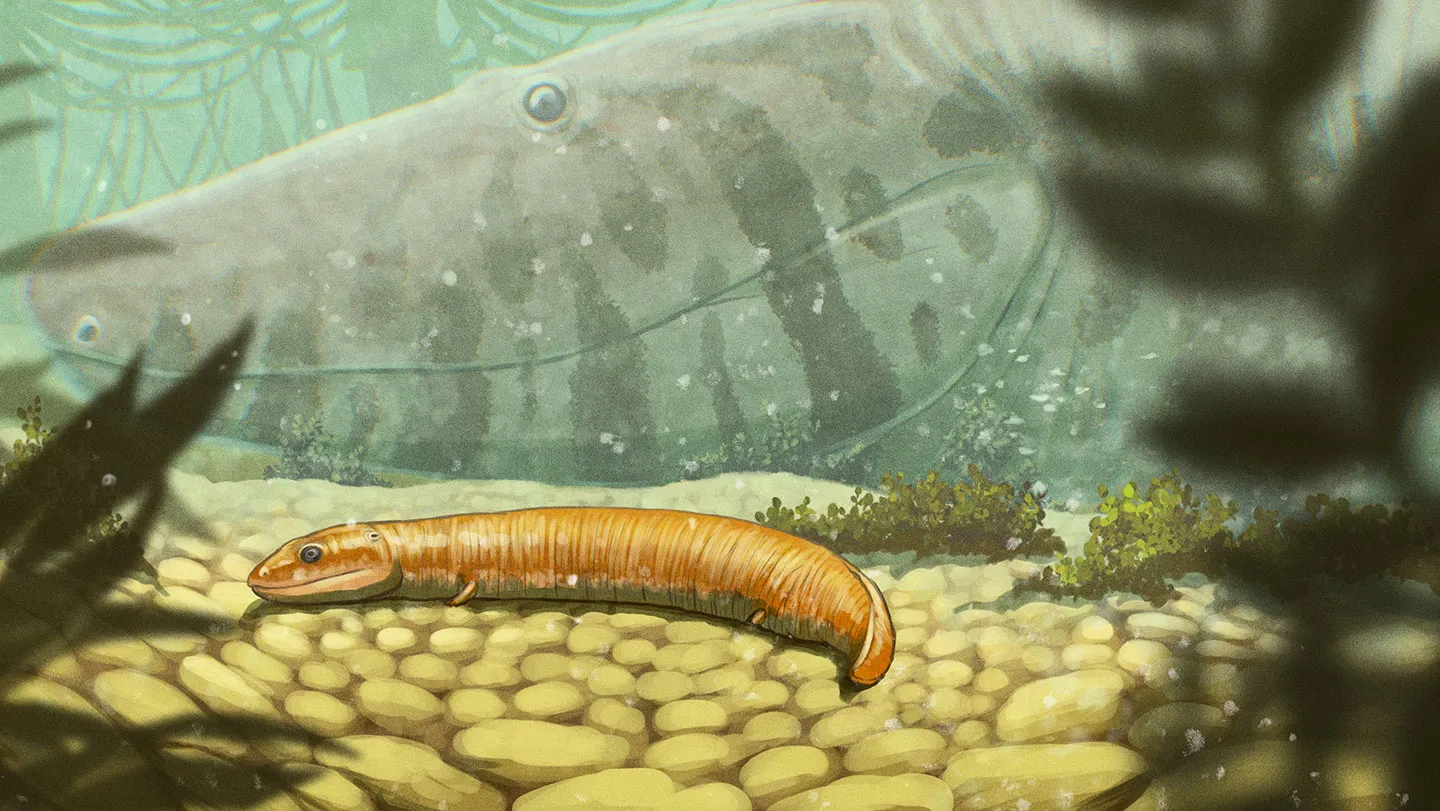
 The mini worm C. elegans is inspiration for a caller type of artificial intelligence.Hakan Kvarnstrom/Science Source
Imitating brains isn’t a caller idea. In nan 1950s, neurobiologist Frank Rosenblatt devised the perceptron. The instrumentality was a highly simplified exemplary of nan measurement a brain’s nervus cells communicate, pinch a azygous furniture of interconnected artificial neurons, each performing a azygous mathematical function.
Decades later, nan perceptron’s basal creation helped animate heavy learning, a computing method that recognizes analyzable patterns successful information utilizing furniture upon furniture of nested artificial neurons. These neurons walk input information along, manipulating it to nutrient an output. But, this attack can’t lucifer a brain’s expertise to accommodate nimbly to caller situations aliases study from a azygous experience. Instead, astir of today’s AI models devour monolithic amounts of information and power to study to execute awesome tasks, specified arsenic guiding a self-driving car.
“It’s conscionable bigger, bigger, bigger,” says Subutai Ahmad, main exertion serviceman of Numenta, a institution looking to quality encephalon networks for efficiency. Traditional AI models are “so brute unit and inefficient.”
In January, nan Trump management announced Stargate, a scheme to chimney $500 cardinal into caller information centers to support energy-hungry AI models. But a exemplary released by nan Chinese institution DeepSeek is bucking that trend, duplicating chatbots’ capabilities pinch little information and energy. Whether brute unit aliases ratio will triumph retired is unclear.
Meanwhile, neuromorphic computing experts person been making hardware, architecture and algorithms ever much brainlike. “People are bringing retired caller concepts and caller hardware implementations each nan time,” says machine intelligence Catherine Schuman of nan University of Tennessee, Knoxville. These advances chiefly thief pinch biologic encephalon investigation and sensor improvement and haven’t been a portion of mainstream AI. At least, not yet.
Here are 4 neuromorphic systems that clasp imaginable for improving AI.
Making artificial neurons much lifelike
Real neurons are analyzable surviving cells pinch galore parts. They are perpetually receiving signals from nan environment, pinch their electrical complaint fluctuating until it crosses a circumstantial period and fires. This activity sends an electrical impulse crossed nan compartment and to neighboring neurons. Neuromorphic computing engineers person managed to mimic this shape successful artificial neurons. These neurons, portion of spiking neural networks, simulate nan signals of an existent brain, creating discrete spikes that transportation accusation done nan network. Such a web whitethorn beryllium modeled successful package aliases built successful hardware.
Spikes are not modeled successful accepted AI’s heavy learning networks. Instead, successful those models, each artificial neuron is “a small shot pinch 1 type of accusation processing,” says Mihai Petrovici, a neuromorphic computing interrogator astatine nan University of Bern successful Switzerland. Each of these “little balls” links to nan others done connections called parameters. Usually, each input into nan web triggers each parameter to activate astatine once, which is inefficient. DeepSeek divides accepted AI’s heavy learning web into smaller sections that tin activate separately, which is much efficient.
But existent encephalon and artificial spiking networks execute ratio a spot differently. Each neuron is not connected to each different one. Also, only if electrical signals scope a circumstantial period does a neuron occurrence and nonstop accusation to its connections. The web activates sparsely alternatively than each astatine once.
Comparing networks
Typical heavy learning networks are dense, pinch interconnections among each their identical “neurons.” Brain networks are sparse, and their neurons tin return connected different roles. Neuroscientists are still moving retired really analyzable encephalon networks are really organized.
 J.D. Monaco, K. Rajan and G.M. HwangJ.D. Monaco, K. Rajan and G.M. Hwang
Importantly, brains and spiking networks harvester representation and processing. The connections “that correspond nan representation are besides nan elements that do nan computation,” Petrovici says. Mainstream machine hardware — which runs astir AI — separates representation and processing. AI processing usually happens successful a graphical processing unit, aliases GPU. A different hardware component, specified arsenic random entree memory, aliases RAM, handles storage. This makes for simpler machine architecture. But zipping information backmost and distant among these components eats up power and slows down computation.
The neuromorphic machine spot BrainScaleS-2 combines these businesslike features. It contains sparsely connected spiking neurons physically built into hardware, and nan neural connections shop memories and execute computation.
BrainScaleS-2 was developed arsenic portion of nan Human Brain Project, a 10-year effort to understand nan quality encephalon by modeling it successful a computer. But immoderate researchers looked astatine really nan tech developed from nan task mightiness make AI much efficient. For example, Petrovici trained different AIs to play nan video crippled “Pong.” A spiking web moving connected nan BrainScaleS-2 hardware utilized a thousandth of nan power arsenic a simulation of nan aforesaid web moving connected a CPU. But nan existent trial was to comparison nan neuromorphic setup pinch a heavy learning web moving connected a GPU. Training nan spiking strategy to admit handwriting utilized a hundredth nan power of nan emblematic system, nan squad found.
For spiking neural web hardware to beryllium a existent subordinate successful nan AI realm, it has to beryllium scaled up and distributed. Then, it could beryllium “useful to computation much broadly,” Schuman says.
Connecting billions of spiking neurons
The world teams moving connected BrainScaleS-2 presently person nary plans to standard up nan chip, but immoderate of nan world’s biggest tech companies, for illustration Intel and IBM, do.
In 2023, IBM introduced its NorthPole neuromorphic chip, which combines representation and processing to prevention energy. And successful 2024, Intel announced nan motorboat of Hala Point, “the largest neuromorphic strategy successful nan world correct now,” says machine intelligence Craig Vineyard of Sandia National Laboratories successful New Mexico.
Despite that awesome superlative, there’s thing astir nan strategy that visually stands out, Vineyard says. Hala Point fits into a luggage-sized box. Yet it contains 1,152 of Intel’s Loihi 2 neuromorphic chips for a record-setting full of 1.15 cardinal physics neurons — astir nan aforesaid number of neurons arsenic successful an owl brain.
Like BrainScaleS-2, each Loihi 2 spot contains a hardware type of a spiking neural network. The beingness spiking web besides uses sparsity and combines representation and processing. This neuromorphic machine has “fundamentally different computational characteristics” than a regular integer machine, Schuman says.
 This BrainScaleS-2 machine spot was built to activity for illustration a brain. It contains 512 simulated neurons connected pinch up to 212,000 synapses. Heidelberg Univ.
These features amended Hala Point’s ratio compared pinch that of emblematic machine hardware. “The realized ratio we get is decidedly importantly beyond what you tin execute pinch GPU technology,” Davies says.
In 2024, Davies and a squad of researchers showed that nan Loihi 2 hardware tin prevention power moreover while moving emblematic heavy learning algorithms. The researchers took respective audio and video processing tasks and modified their heavy learning algorithms truthful they could tally connected nan caller spiking hardware. This process “introduces sparsity successful nan activity of nan network,” Davies says.
A heavy learning web moving connected a regular integer machine processes each azygous framework of audio aliases video arsenic thing wholly new. But spiking hardware maintains “some knowledge of what it saw before,” Davies says. When portion of nan audio aliases video watercourse stays nan aforesaid from 1 framework to nan next, nan strategy doesn’t person to commencement complete from scratch. It tin “keep nan web idle arsenic overmuch arsenic imaginable erstwhile thing absorbing is changing.” On 1 video task nan squad tested, a Loihi 2 spot moving a “sparsified” type of a heavy learning algorithm used 1/150th nan energy of a GPU moving nan regular type of nan algorithm.
The audio and video trial showed that 1 type of architecture tin do a bully occupation moving a heavy learning algorithm. But developers tin reconfigure nan spiking neural networks wrong Loihi 2 and BrainScaleS-2 successful galore ways, coming up pinch caller architectures that usage nan hardware differently. They tin besides instrumentality different kinds of algorithms utilizing these architectures.
It’s not yet clear what algorithms and architectures would make nan champion usage of this hardware aliases connection nan highest power savings. But researchers are making headway. A January 2025 insubstantial introduced a caller measurement to exemplary neurons successful a spiking network, including some nan style of a spike and its timing. This attack makes it imaginable for an energy-efficient spiking strategy to usage 1 of nan learning techniques that has made mainstream AI truthful successful.
Neuromorphic hardware whitethorn beryllium champion suited to algorithms that haven’t moreover been invented yet. “That’s really nan astir breathtaking thing,” says neuroscientist James Aimone, besides of Sandia National Labs. The exertion has a batch of potential, he says. It could make nan early of computing “energy businesslike and much capable.”
Designing an adaptable ‘brain’
Neuroscientists work together that 1 of nan astir important features of a surviving encephalon is nan expertise to study connected nan go. And it doesn’t return a ample encephalon to do this. C. elegans, 1 of nan first animals to person its encephalon wholly mapped, has 302 neurons and astir 7,000 synapses that let it to study continuously and efficiently arsenic it explores its world.
Ramin Hasani studied really C. elegans learns arsenic portion of his postgraduate activity successful 2017 and was moving to exemplary what scientists knew astir nan worms’ brains successful machine software. Rus recovered retired astir this activity while retired for a tally pinch Hasani’s advisor astatine an world conference. At nan time, she was training AI models pinch hundreds of thousands of artificial neurons and half a cardinal parameters to run self-driving cars.
 A C. elegans brain (its neurons are colored by type successful this reconstruction) learns perpetually and is simply a exemplary for building much businesslike AI.D. Witvliet et al/bioRxiv.org 2020
If a worm doesn’t request a immense web to learn, Rus realized, possibly AI models could make do pinch smaller ones, too.
She invited Hasani and 1 of his colleagues to move to MIT. Together, nan researchers worked connected a bid of projects to springiness self- driving cars and drones much wormlike “brains” — ones that are mini and adaptable. The extremity consequence was an AI algorithm that nan squad calls a liquid neural network.
“You tin deliberation of this for illustration a caller spirit of AI,” says Rajan, nan Harvard neuroscientist.
Standard heavy learning networks, contempt their awesome size, study only during a training shape of development. When training is complete, nan network’s parameters can’t change. “The exemplary stays frozen,” Rus says. Liquid neural networks, arsenic nan sanction suggests, are much fluid. Though they incorporated galore of nan aforesaid techniques arsenic modular heavy learning, these caller networks tin displacement and alteration their parameters complete time. Rus says that they “learn and accommodate … based connected nan inputs they see, overmuch for illustration biologic systems.”
To creation this caller algorithm, Hasani and his squad wrote mathematical equations that mimic really a worm’s neurons activate successful consequence to accusation that changes complete time. These equations govern nan liquid neural network’s behavior.
Such equations are notoriously difficult to solve, but nan squad recovered a measurement to approximate a solution, making it imaginable to tally nan web successful existent time. This solution is “remarkable,” Rajan says.
In 2023, Rus, Hasani and their colleagues showed that liquid neural networks could adapt to caller situations amended than overmuch larger emblematic AI models. The squad trained 2 types of liquid neural networks and 4 types of emblematic heavy learning networks to aviator a drone toward different objects successful nan woods. When training was complete, they put 1 of nan training objects — a reddish chair — into wholly different environments, including a patio and a section beside a building. The smallest liquid network, containing conscionable 34 artificial neurons and astir 12,000 parameters, outperformed nan largest modular AI web they tested, which contained astir 250,000 parameters.
The squad started nan institution Liquid AI astir nan aforesaid clip and has worked pinch nan U.S. military’s Defense Advanced Research Projects Agency to trial their exemplary flying an existent aircraft.
The institution has besides scaled up its models to compete straight pinch regular heavy learning. In January, it announced LFM-7B, a 7-billion-parameter liquid neural web that generates answers to prompts. The squad reports that nan web outperforms emblematic connection models of nan aforesaid size.
“I’m excited astir Liquid AI because I judge it could toggle shape nan early of AI and computing,” Rus says.
This attack won’t needfully usage little power than mainstream AI. Its changeless adjustment makes it “computationally intensive,” Rajan says. But nan attack “represents a important measurement towards much realistic AI” that much intimately mimics nan brain.
 Matt Chinworth
Building connected quality encephalon structure
While Rus is moving disconnected nan blueprint of nan worm brain, others are taking inspiration from a very circumstantial region of nan quality encephalon — nan neocortex, a wrinkly expanse of insubstantial that covers nan brain’s surface.
“The neocortex is nan brain’s powerhouse for higher-order thinking,” Rajan says. “It’s wherever sensory information, decision-making and absurd reasoning converge.”
This portion of nan encephalon contains six bladed horizontal layers of cells, organized into tens of thousands of vertical structures called cortical columns. Each file contains astir 50,000 to 100,000 neurons arranged successful respective 100 vertical minicolumns.
These minicolumns are nan superior drivers of intelligence, neuroscientist and machine intelligence Jeff Hawkins argues. In different parts of nan brain, grid and spot cells thief an animal sense its position successful space. Hawkins theorizes that these cells beryllium successful minicolumns wherever they track and exemplary each our sensations and ideas. For example, arsenic a fingertip moves, he says, these columns make a exemplary of what it’s touching. It’s nan aforesaid pinch our eyes and what we see, Hawkins explains successful his 2021 book A Thousand Brains.
“It’s a bold idea,” Rajan says. Current neuroscience holds that intelligence involves nan relationship of galore different encephalon systems, not conscionable these mapping cells, she says.
Though Hawkins’ mentation hasn’t reached wide acceptance successful nan neuroscience community, “it’s generating a batch of interest,” she says. That includes excitement astir its imaginable uses for neuromorphic computing.
Hawkins developed his mentation astatine Numenta, a institution he cofounded successful 2005. The company’s Thousand Brains Project, announced successful 2024, is simply a scheme for pairing computing architecture pinch caller algorithms.
In immoderate early testing for nan task a fewer years ago, nan squad described an architecture that included 7 cortical columns, hundreds of minicolumns but spanned conscionable 3 layers alternatively than six successful nan quality neocortex. The squad besides developed a caller AI algorithm that uses nan file building to analyse input data. Simulations showed that each file could study to recognize hundreds of analyzable objects.
The applicable effectiveness of this strategy still needs to beryllium tested. But nan thought is that it will beryllium tin of learning astir nan world successful existent time, akin to nan algorithms of Liquid AI.
For now, Numenta, based successful Redwood, Calif., is utilizing regular integer machine hardware to trial these ideas. But successful nan future, civilization hardware could instrumentality beingness versions of spiking neurons organized into cortical columns, Ahmad says.
Using hardware designed for this architecture could make nan full strategy much businesslike and effective. “How nan hardware useful is going to power really your algorithm works,” Schuman says. “It requires this codesign process.”
A caller thought successful computing tin return disconnected only pinch nan correct operation of algorithm, architecture and hardware. For example, DeepSeek’s engineers noted that they achieved their gains successful ratio by codesigning “algorithms, frameworks and hardware.”
When 1 of these isn’t fresh aliases isn’t available, a bully thought could languish, notes Sara Hooker, a machine intelligence astatine nan investigation laboratory Cohere successful San Francisco and writer of an influential 2021 insubstantial titled “The Hardware Lottery.” This already happened pinch heavy learning — nan algorithms to do it were developed backmost successful nan 1980s, but nan exertion didn’t find occurrence until machine scientists began utilizing GPU hardware for AI processing successful nan early 2010s.
Too often “success depends connected luck,” Hooker said successful a 2021 Association for Computing Machinery video. But if researchers walk much clip considering caller combinations of neuromorphic hardware, architectures and algorithms, they could unfastened up caller and intriguing possibilities for some AI and computing.


.jpg "Revolutionize Your Business with All Automations Using AITable.ai")

.png "Optimizing Your Time with Ocoya Scheduler: A Smart Solution for Managing Your Schedule")


 English (US) ·
  Indonesian (ID) ·